cruising contemporary art: the baths
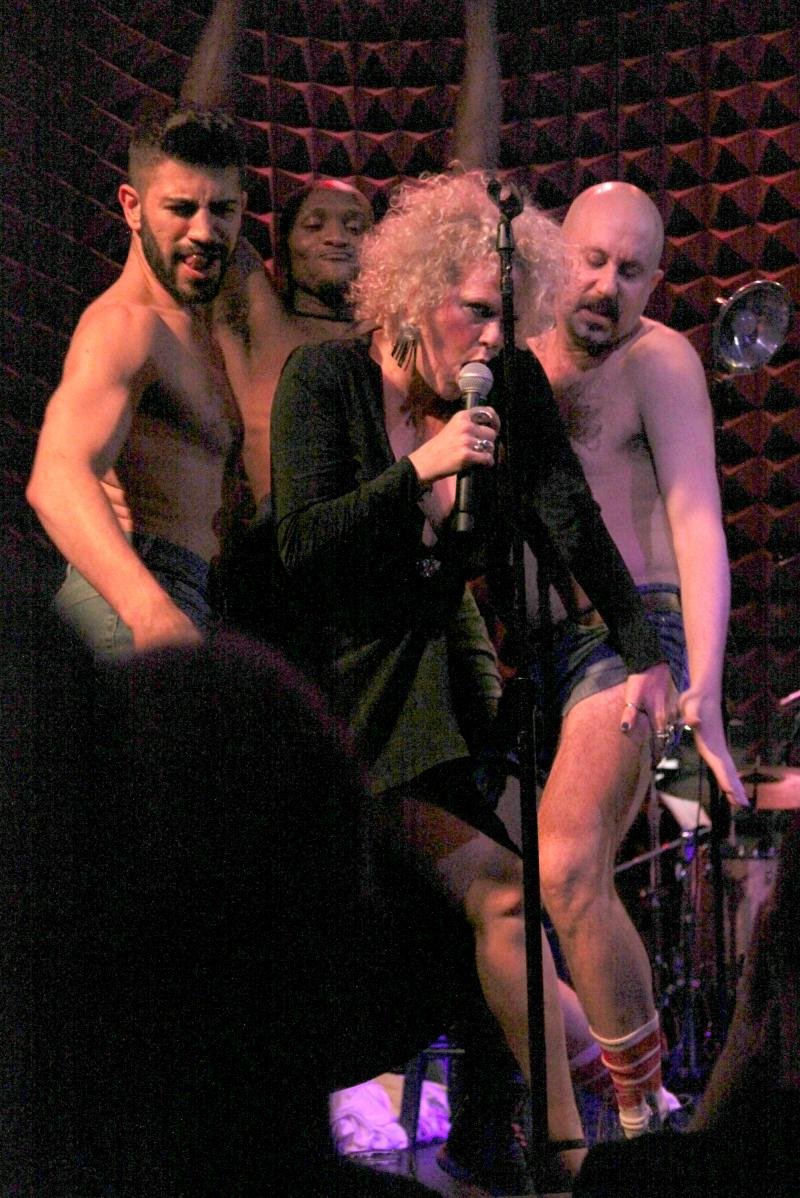
Upon entering Amber Martin’s “Bathhouse Bette,” audience members are required to coat-check their street cloths and don a white towel. Once inside, awaiting the titular performance, they’re invited to mingle with a cocktail, dance to the disco on vinyl, or cruise the active upstairs darkroom. “Sure, some of the glazey-eyed super sluts were still going at it [upstairs], but for the most part, everyone came down and sat to listen to Amber in this sweet familial way,” said Woody Schticks, who was present at the performance’s fourth installment as part of New Orlean’s Labor Day gay festival, Southern Decadence. Before and after Martin’s ballads, sex was everywhere: “I was sitting with some girlfriends and these two guys—this on and off couple—they were just railing into each other! I loved it!” Schticks said.
Martin’s event is inspired by Bette Midler’s 1971 performance at the Continental Baths in New York City; though, she isn’t doing an impersonation of Bette so much as taking a cue from the proto-faghag songstress; Martin is by all accounts, an incredible singer and storyteller, able to command a reverent audience. Its first iteration was in the fall of 2019, where the aesthetics of cruising were referenced via a few male models wearing towels on stage at Joe’s Pub, also in the East Village. By its third installment (after one virtual performance during the pandemic), part of 2022’s Southern Decadence, cruising was an active agent within the performance space.
“Bathhouse Bette” is an explicit example of the ways that 1970s public cruising cultures are inspiring contemporary art and cruising; but, it’s also indicative of the ticketed pop-up event that has come to dominate deviant public sex cultures. For cis gay men—especially during an event like Southern Decadence that is marketed as a weekend-long fuck-fest—there are a plethora of options: at Hit It! which pops-up in spaces throughout New Orleans seasonally, gay sex is central with leather slings hanging in temporary dungeons; Horsemeat Disco is a DJ’d house and techno danceparty with an implicit uniform of MDMA-sweat soaked jockstraps; Gimme a Reason is another techno party that has a monthly reservation at Poor Boys Bar. While advertisements for these parties do evoke vintage aesthetics (such as the album cover of Patrick Crowley or BUTT Magazine), what makes “Bathhouse Bette” singular is not only that it names its historical reference, but goes about successfully merging an art event with cruising and semi-public sex.
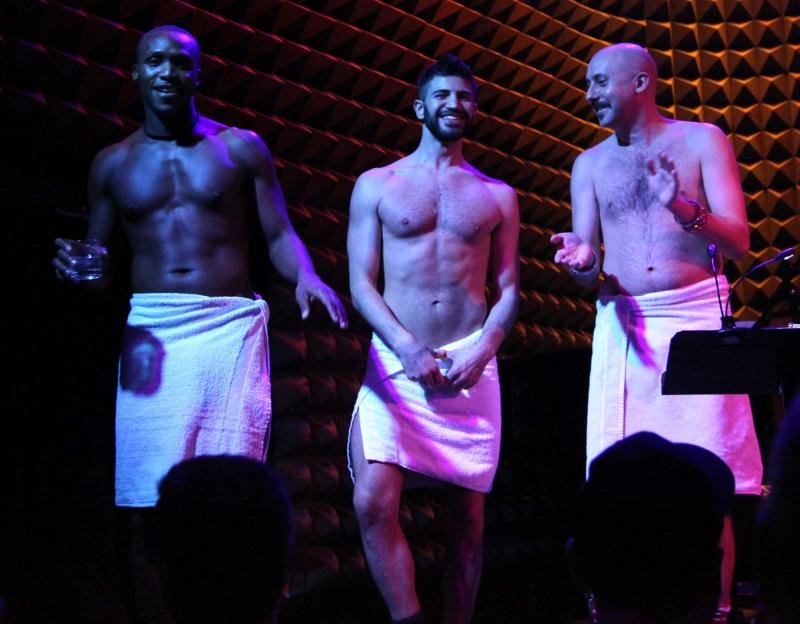
^ comedienne Amber Martin sings while male models in white towels dance on stage.


< Gimme a Reason’s washed out aesthetic references the resurgence of BUTT MAG, a once-discontinued gay publication that was also alluding to the look of ‘90s gay porn serials.
Memories of “the Bathhouse” as a humid haven for men seeking sex with men also haunt New Orleans-based musician Ruth Mascelli’s 2021 release, “A Night at the Baths.” Mascelli explains her relationship to music-making, cruising, and their connection to queer histories in the liner notes:
“…this album is an audio diary of adventures had at various bathhouses, dark rooms, and gay clubs while on tour with [punk band] Special Interest and traveling on my own. It was a way of wrapping my head around my own experiences in those very specific surroundings but also an attempt to connect to the current of queer history flowing through those spaces. Cruising dystopia, libidinal contact, anonymity & risk - rites of passage with a potent lineage.”
Mascelli recreates “the bathhouse” as a sonic space, wherein an architecture of pleasure, longing, and nostalgic cruising is auditory based and revisited anytime via amplification at a danceparty or in private earbuds. In the liner notes, she conceptualizes each track as “it’s own room or physical space. Some may be lonely, some crowded, but I tried to leave them open enough to walk around and explore.” The work is compositionally inspired by the music of Patrick Crowley, who created minimal techno soundscapes for gay pornos bound for VHS distribution. Patrick McDermott, in writing about Crowley, supposes that “porn music is functional music, meant to accompany action without upstaging what is onscreen, ramping and building towards release while subtly whispering that there’s always more to come.” Functional as in defined by its form: a music that essentially mimics a state of arousal that ends in explosive orgasm. While Crowley’s compositions play with a pastiche soundscape, they do so with an entrancing pulse that Mascelli carries into her somewhat darker compositions. Reverberations in her beats begin to have a discernible architectural quality: a spaciousness, but one that also feels haunted by by-gone cruisers of the past. Mascelli describes this sonic space further:
“I was in a particularly dark and cavernous sex club when I heard an unstable melody crackling from down the hall. Instead of a proper sound system this place had the kind of network of tinny intercom speakers you would find in a school.”
